The 2026 Sovereignty Roadmap: Reclaiming Control of Your Lead Lifecycle

There is a specific anxiety that plagues the owners of trade businesses in the £250k to £1.5m revenue bracket. It is not the fear of hard work; you are accustomed to that. It is the subtle, gnawing fear of dependency.
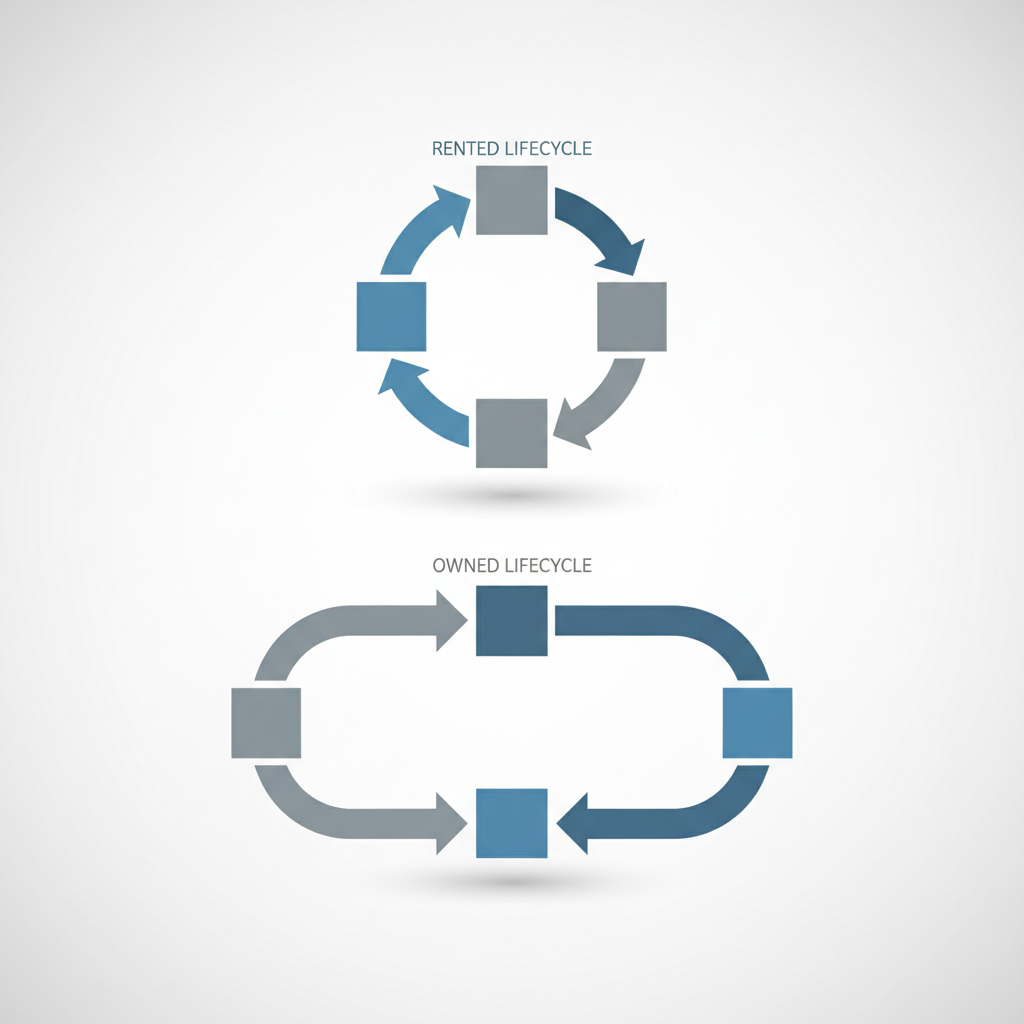
If you rely entirely on third-party lead generation platforms—sites where you pay for the privilege of quoting against three other firms—you do not own your customer acquisition. You rent it. If you rely on word of mouth alone, you do not have a predictable engine. You have hope. And hope is not a strategy for a business with overheads, a fleet, and a payroll to meet every month.
The businesses that will dominate the UK market in 2026 are not necessarily the ones with the flashiest vans or the cheapest prices. They are the businesses that have transitioned from renting their leads to owning their entire lead lifecycle.
This is a strategic roadmap for regaining control, securing your cash flow, and building a business that functions as an asset, not just a job.
The High Cost of the "Leaky Bucket"
Let us look at a standard financial scenario. Consider a heating engineer or a roofer. A standard job might be worth £1,200 to £3,000. In the current climate, demand is rarely the issue; friction is.
You are on-site, perhaps up a ladder or under a sink. Your phone rings. It is a potential client who found you via Google Maps. You cannot answer. They leave no voicemail. They simply hang up and call the next number on the list.
That unanswered call was not just a nuisance. It was a £1,200 loss. If that happens twice a week, you are bleeding over £100,000 in revenue annually simply because your infrastructure could not bridge the gap between inquiry and response.
This is the "Leaky Bucket" syndrome. Many owners try to fix this by pouring more water in (buying more leads, spending more on ads), rather than fixing the hole in the bucket. The strategic move is to build an infrastructure that catches every drop.
The Sovereignty Roadmap: Three Phases of Control
To move from chaos to quiet authority, you must restructure how your business handles information. This is not about installing complex software that no one uses. It is about implementing a protocol.
Phase 1: Consolidate and Capture
Most trade businesses operate on a fragmented ecosystem: WhatsApp messages, scraps of paper, email inboxes, and mental notes. This fragmentation is the enemy of equity. If your customer data exists only on your personal mobile, you do not have a business; you have a contact list.
The first step is centralisation. Every inquiry—whether from your website, social media, or a phone call—must funnel into a single source of truth. This is not administrative busywork; it is asset protection. When you own the data, you own the relationship. You stop competing on price because you control the communication channel.
Phase 2: The Response Protocol
Speed is the currency of the modern trade sector. Studies consistently show that the vendor who responds first wins the business up to 70% of the time, provided the price is within market range.
However, you cannot be everywhere. You cannot answer the phone at 8:00 PM when you are with your family, nor can you answer at 10:00 AM when you are briefing a site manager. This is where automated infrastructure becomes essential.
Imagine a system that detects a missed call and instantly sends a text message: "Sorry I missed you, I’m currently on a job. How can I help?"
The prospect, who was about to call your competitor, pauses. They reply. The dialogue has begun. You have captured the lead without lifting a finger. This is not "salesy" behaviour; it is professional reliability. It signals to the client that you are organised and responsive—traits they value highly in a tradesperson.
Phase 3: Reactivation and Lifecycle Management
The greatest wasted asset in most UK trade businesses is the "past customer" list. You likely have hundreds of customers who paid you, were happy with your work, and have not heard from you since.
If you are a plumber, every boiler you installed three years ago needs servicing. If you are a landscaper, every patio you laid needs maintenance. These are not cold leads; they are high-trust relationships waiting to be reactivated.
A strategic business owner does not wait for the phone to ring. They have a system that automatically nudges these past clients at the appropriate intervals. This stabilizes cash flow, filling the gaps in your diary with high-margin work that requires zero advertising spend to acquire.
The Nexus Approach: Infrastructure as an Asset
Implementing this roadmap requires discipline, but it does not require you to become an IT expert. This is where Nexus fits into the equation.
We do not view Nexus as a marketing tool. We view it as essential business infrastructure. It is the operating system that runs in the background, ensuring that:
- Every inquiry is captured.
- Every missed call receives a response.
- Every quote is followed up until a decision is made.
- Every past client is remembered and nurtured.
This system removes the emotional variance from your revenue. It eliminates the panic of a quiet week because you have the levers to generate work from your existing database. It removes the frustration of missed opportunities.
Structuring for 2026
The trade landscape is shifting. The divide between the "one-man band" and the scalable enterprise is widening. The difference is rarely the quality of the manual labour; it is the quality of the business management.
By taking control of your lead lifecycle today, you are doing more than just booking jobs for next week. You are building a company that is robust, sellable, and independent of external lead-generation platforms.
You have built your reputation on the quality of your trade. It is time to build a business structure that matches that standard. Control the process, and you control the outcome.